
The right moisture level in churches and historic buildings
An old building does not need to be warm to be in good condition
Churches and other historic buildings are often used intermittently. Keeping them heated year-round to control relative humidity therefore results in substantial and frequently unnecessary energy consumption.
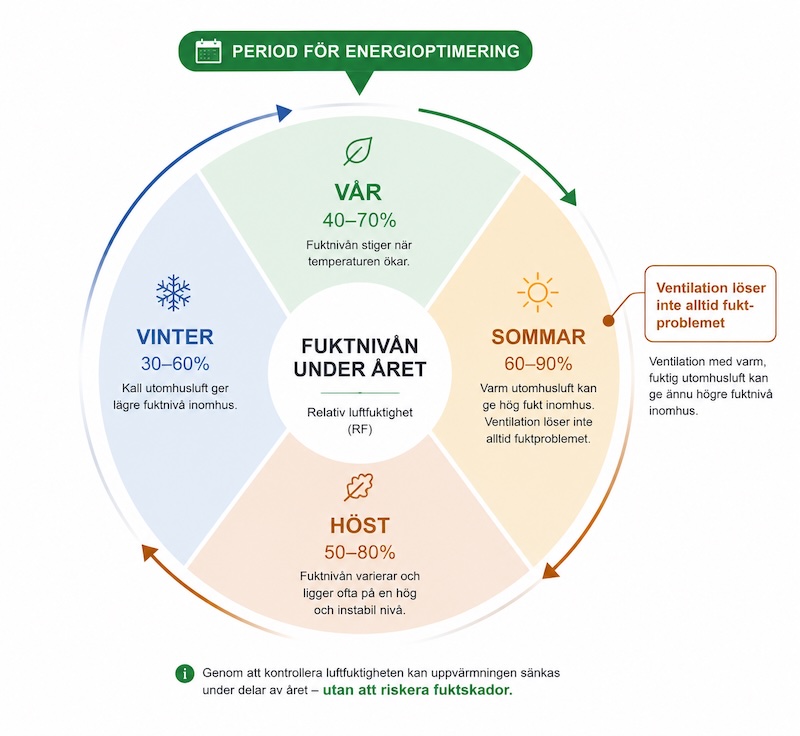
When the temperature drops, relative humidity rises. If humidity levels remain too high for extended periods, the risk of mold and other moisture-related damage to the building and its interior furnishings increases.
By controlling humidity instead of temperature, the building can be kept colder when unoccupied without losing control over the indoor climate.
Moisture load varies throughout the year
The relative humidity in a church is affected by the season, temperature, and ventilation. During certain parts of the year, moisture levels can become high enough to pose a risk to the building and its interior.
Ventilation is not always the solution. When outdoor air is warm and humid, ventilation can instead introduce more moisture into a cool building.
With active moisture control, relative humidity can be maintained at a stable level while reducing heating requirements.
Protect the building with lower energy consumption
Reduce heating requirements
Instead of using heat to keep relative humidity down, dehumidification can regulate moisture levels directly. This makes it possible to lower the temperature when the building is not in use and avoid unnecessary heating of large volumes.
Protect the building and its interior
A stable indoor climate reduces the risk of mold and other moisture-related damage to the structure and its furnishings.
A solution requiring minimal structural intervention
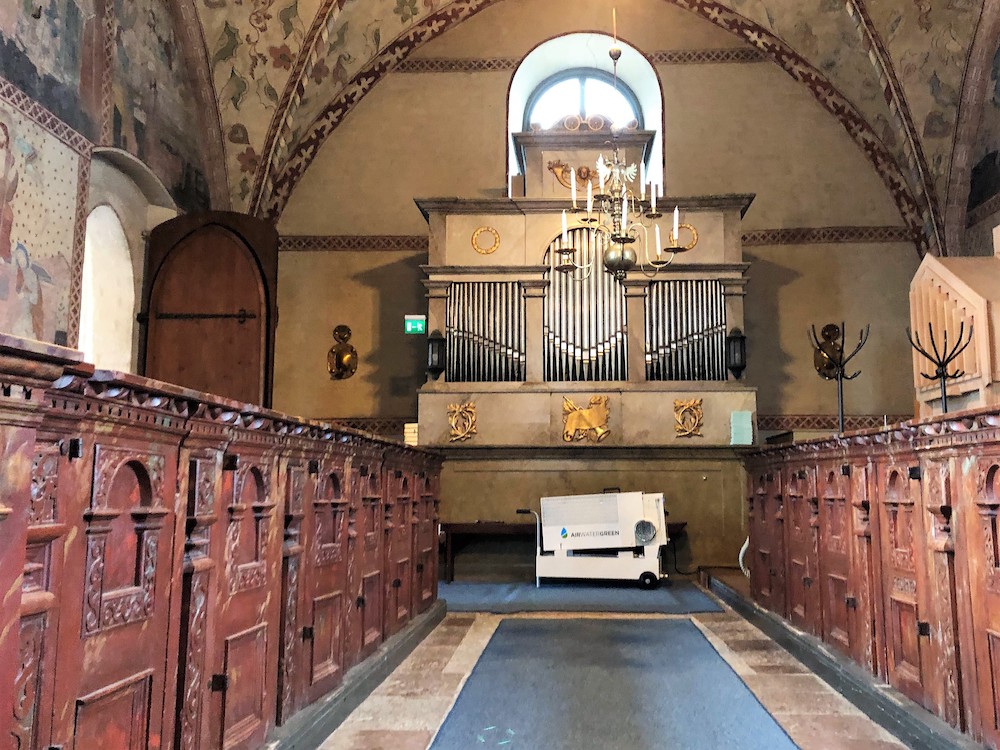
In historically significant buildings, it is often crucial that installations have a minimal impact on the structure itself. FLEX requires no ventilation ducts or core drilling through the facade, needing only a power supply and a method to collect or drain away the condensate.

Over 350 churches use our solutions

Airwatergreen has installations in more than 350 churches. Experience from these buildings demonstrates how active moisture control can be utilized to protect structures and interiors while reducing the need for continuous heating.
A study conducted by Uppsala University compared the energy consumption of heating versus dehumidification for controlling relative humidity in a church. The study showed a significant difference in energy consumption in favor of dehumidification.
FLEX or REX – depending on the building's requirements
Churches and historic buildings vary in size, construction, usage, and moisture load. Therefore, dehumidification systems must be dimensioned according to the building's specific conditions.
A study conducted by Uppsala University compared the energy consumption of heating versus dehumidification for controlling relative humidity in a church. The study showed a significant difference in energy consumption in favor of dehumidification.
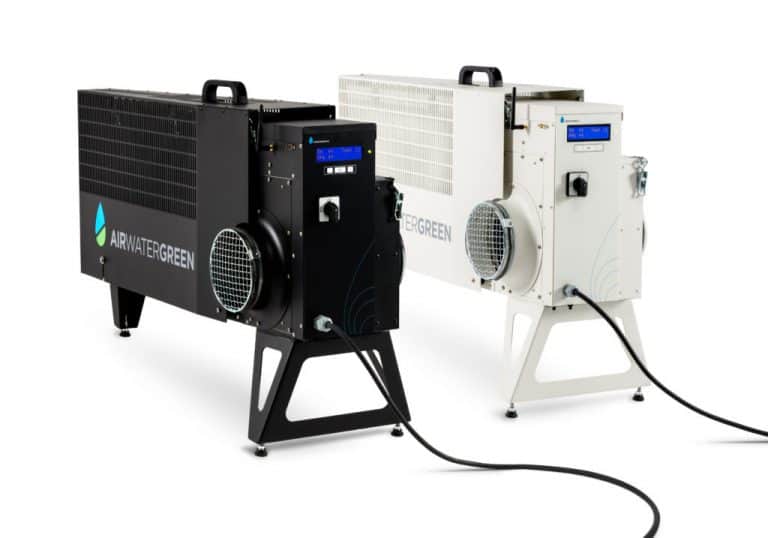
FLEX Dehumidifier
FLEX is suitable for many churches and smaller historic buildings. It is portable, requires no ventilation ducts, and is engineered for efficient dehumidification even at low temperatures.
For a typical stone church of approximately 1,000 m³, used intermittently and maintained at around 5 °C, 1–2 FLEX units serve as a guideline.
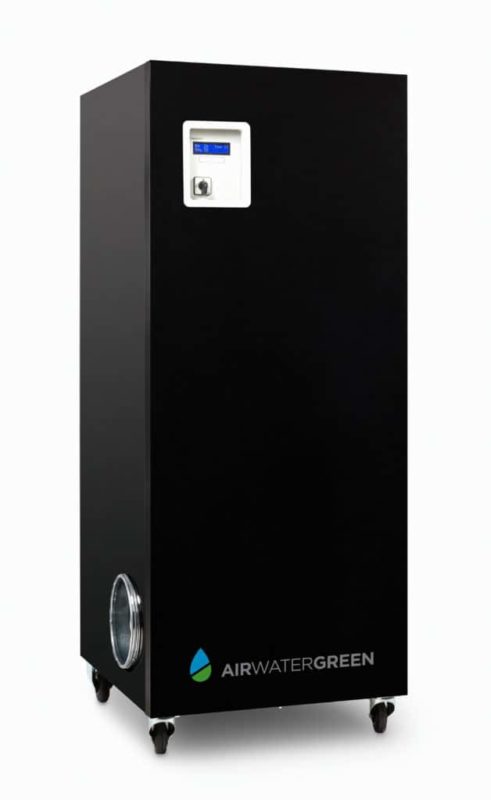
REX Dehumidifier
For larger buildings and environments with greater air volumes, REX can be a suitable alternative.
We help you evaluate building volume, moisture load, and operating conditions to select and size the right solution.
The right solution begins with the building's specific conditions
Every heritage building is unique. Size, construction, temperature, usage, and moisture load all influence the required solution.
We help you assess the conditions and find a solution that ensures a stable indoor climate with the lowest possible energy consumption.
Contact Johanna Jönsson
Regional Sales Manager – Sweden