This makes maintaining good air quality especially important to ensure a healthy environment to spend time in.
It is increasingly common for advanced control and monitoring systems to manage and regulate the climate in buildings to achieve optimal conditions with the lowest possible energy consumption. Our dehumidifiers are equipped for easy connection via Modbus or WiFi.
Crawl spaces
Challenge
The moisture load in crawl spaces typically originates from the ground. If humidity levels are too high, mold and bacterial growth soon develop within the crawl space, particularly in the presence of organic materials. Crawl spaces under schools can vary significantly in design, often featuring long corridors where maintaining adequate airflow is essential to ensure all areas of the crawl space are properly dehumidified.

Our solution
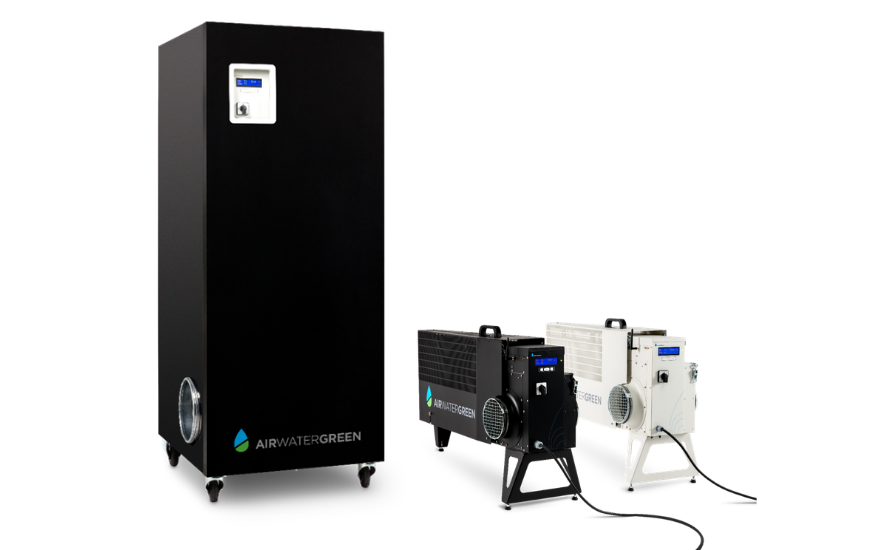
The FLEX dehumidifier can either be set to a specific relative humidity level or to a "mold index" (LIM1), providing optimal control targeting the correct moisture level based on the temperature in the crawl space. FLEX features built-in intelligence and can be connected to potential monitoring systems both for remote control and for logging temperature and moisture data where the unit is installed. Installation is simplified by the fact that we generate dry air on-site, which is then distributed throughout the space by the powerful built-in fan.
A 220V power supply is usually available in most cases, and water drainage can be handled in various ways, such as connecting to a floor drain passing through the crawl space.
Attics
Challenge
Moisture often occurs in well-insulated houses when humid air is ventilated inward from the outside.
Our solution
Installation is straightforward since the dehumidifier generates dry air on-site, and this dry air is distributed throughout the space by the powerful built-in fan.
Basement storage and other below-ground spaces
Challenge
Moisture in basements can originate from the ground as well as from poorly drained walls. The risks associated with high moisture levels in basement areas include corrosion and mold, as well as excessively high moisture content in the concrete. If the concrete is too moist, the reinforcement steel can begin to corrode, which may lead to concrete spalling.
Our solution
FLEX and/or REX are suitably set to a relative humidity level below 55% RH to protect against corrosion and mold. Installation is straightforward since the dehumidifier generates dry air on-site, and this dry air is distributed throughout the space by the powerful built-in fan. This ensures a simple installation in existing buildings.
A 220V power supply is usually available in most cases, and water drainage can be handled in various ways, such as connecting to a floor drain.