
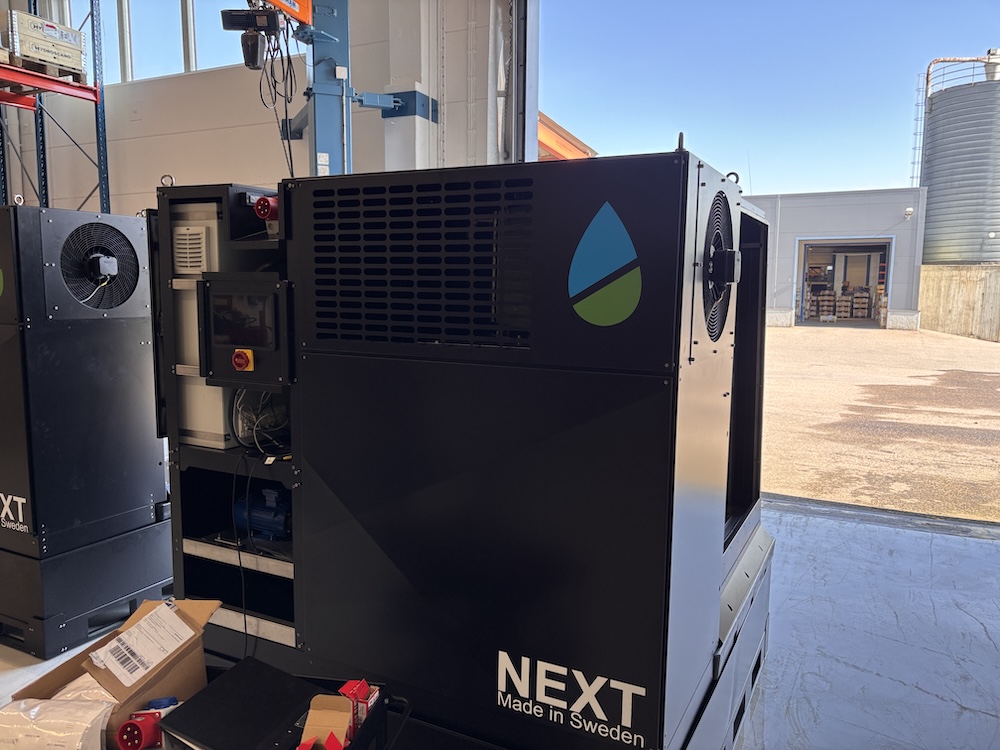
An easier way into the building
When we installed the first generation of NEXT, we saw how much the path into the facility could affect the installation. There might be plenty of space where the machine was to be placed, but the doorways along the way were too narrow.
That is why we gave the second generation a more modular design. The dehumidifier can be transported in smaller sections, making it easier to install in areas with limited space. The design also makes it possible to replace individual components and upgrade the machine over time.
More particles in the air placed new demands on the filtration system
At some customer sites, the air contained more particles than in our lab tests. As a result, certain components wore out faster than we had anticipated. Based on our experiences at these sites, we therefore improved the air filtration in NEXT.
This Is How We Build NEXT with Consistent Quality
Once an improvement is finalized on the drawing board, it needs to work in mass production. Our engineers work closely with Mekanotjänst’s production team to develop both the machine and the manufacturing process.
In the second video, Jonas Högström and Emil Svedman take us inside the factory. There, it becomes clear why manufacturing needs to be involved early in the development process. Decisions about how the machine is designed affect how it can be assembled and tested, unit by unit.