

Background
Because the air in Frigoscandia's 4,000 m² cold storage facility is maintained at a low temperature, negative pressure is generated inside the warehouse, causing outdoor air to be drawn in. When warmer, humid outdoor air meets cold surfaces, condensation forms, leading to moisture-related challenges and damage. Cooling units are strained by ice formation, requiring regular defrosting, and packaging can be damaged. Furthermore, slip-and-fall accidents can occur due to condensation on cold floors.
These challenges can be effectively managed using Airwatergreen's air dehumidifiers. Low power consumption, simple installation, and high capacity even at low temperatures make this possible!
What problems did Airwatergreen's dehumidifiers solve?
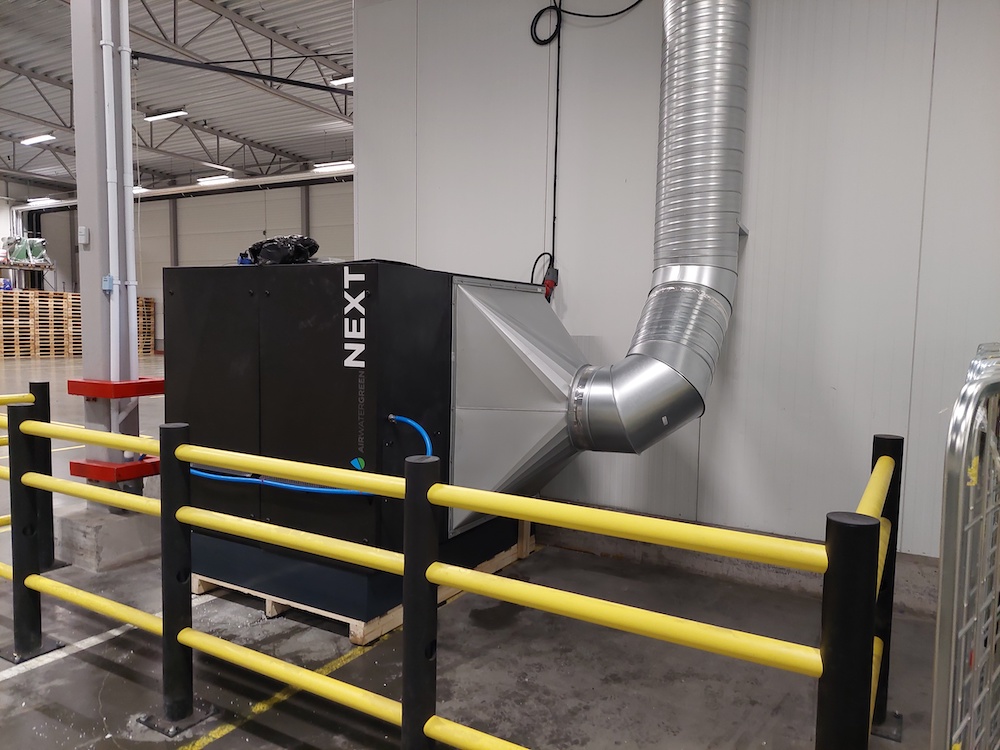
A NEXT240 unit was installed in the cold storage facility, where it captures moisture entering primarily through the loading bays. Humid air flows in during periods when the doors are open and quickly disperses throughout the warehouse.
Since part of the facility is used as a freezer storage, we supply dried air to the access tunnel leading from the cold storage into the freezer area (see image below). In this way, we create a dry zone in the airlock that prevents excess moisture from penetrating the freezer section. The entryway features a high-speed roller door leading into the freezer and a strip curtain facing the cold storage. This allows dry air to flow out into the cold storage along that path. Humid air is drawn from the cold storage, thereby reducing the humidity level throughout the entire facility.
We continuously measure humidity and temperature at multiple locations in the warehouse, allowing us to monitor the climate and optimize the control of the dehumidifier over time.
Benefits of using Airwatergreen's products versus doing nothing?
In Frigoscandia's cold storage, we have eliminated condensation on cold surfaces, which previously caused accidents and damage to goods and property. The working environment in the cold storage is also less damp and chilly. Challenges with ice formation in the freezer storage—along with costly and time-consuming defrosting cycles—have been reduced, saving energy and minimizing wear on the cooling units.