

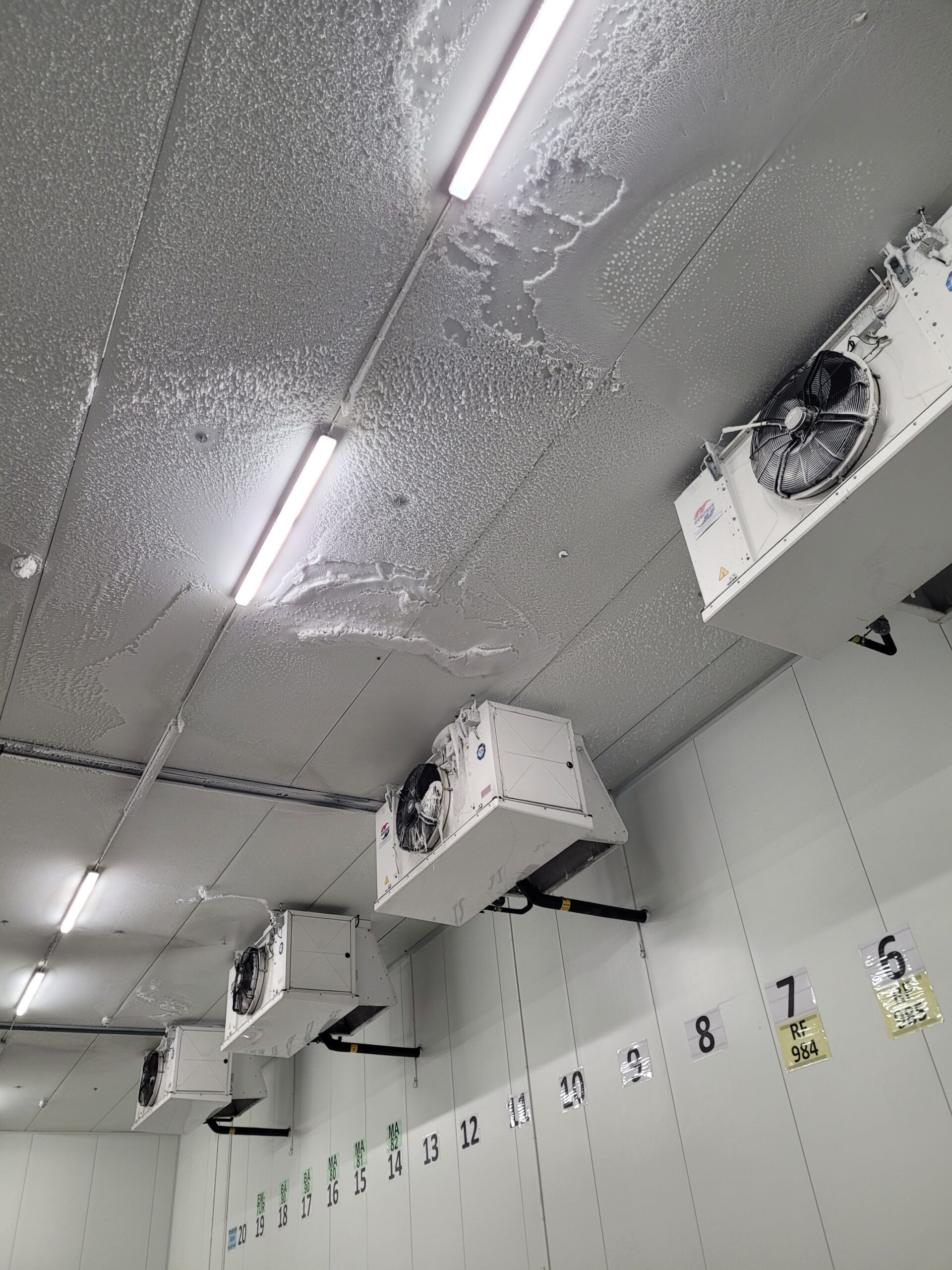
Excessive humidity can lead to condensation, corrosion, mold growth, and icing, causing costly damage in industrial environments, logistics hubs, and various types of buildings. But which dehumidification technology is best suited to your needs? This article outlines the most common methods along with their pros and cons to help you make an informed decision.
The Importance of Dehumidification
Moisture control is critical across multiple industries:
- Prevents condensation, corrosion, and water-related damage
- Protects machinery, products, and infrastructure from corrosion
- Maintains stable climatic conditions in warehouses and storage facilities
- Reduces energy costs by improving efficiency in temperature-controlled environments
- Ensures a safe working environment by mitigating risks such as slippery surfaces and poor air quality
Each of these objectives underscores the importance of a reliable and efficient dehumidification system. By addressing these challenges, businesses can minimize risks, enhance productivity, and reduce operational costs.


Overview of Common Dehumidification Technologies
Several dehumidification technologies exist, each engineered to address specific moisture-related challenges. Let us explore their characteristics, advantages, and limitations to help you make an informed decision. Each technology has its specific application depending on the climate, facility type, and moisture challenges.
- Condensation dehumidifiers (refrigerant-based) – Efficient in warm environments
- Desiccant dehumidifiers – Ideal for cold conditions and precise moisture control
- CVP Technology – Airwatergreen's Solution
1. Condensation dehumidifiers (refrigerant) – for warm environments
How does it work? Condensation dehumidifiers use a cooling coil to lower the air temperature. As the air cools, moisture condenses and is collected as water. The dry air is then reheated and recirculated.
However, condensation dehumidifiers have limited efficiency as they only perform well in warm environments above 10°C. At lower temperatures, the cooling coil can freeze, significantly reducing performance. Furthermore, due to technological limitations, these systems are not ideal for industrial environments with heavy moisture loads and a requirement for extremely dry air.
2. Desiccant dehumidifiers – high performance in cold conditions
How does it work? Desiccant dehumidifiers use a moisture-absorbing material (e.g., silica gel) to extract moisture from the air. The moisture is subsequently removed through a heating process.
Key benefits:
-
- Operates efficiently in cold environments, making it ideal for refrigerated warehouses, logistics, and industrial storage.
- Removes moisture even at low humidity levels.
Unlike condensation-based systems, there is no risk of coil frosting, but heat is required to drive off moisture from the desiccant (resulting in higher energy consumption). This technology can be costly to install and operate continuously.

3. CVP technology – Airwatergreen's method for dehumidification
Airwatergreen's CVP technology (Control Vapor Pressure), used in the NEXT series, is a patented version of desiccant technology, offering a high-performance and energy-efficient dehumidification method that eliminates several major drawbacks.
Why this innovative technology in NEXT stands out today:
- Operates efficiently in both warm and cold environments – no performance loss at low temperatures.
- Consumes 30–70% less energy than traditional systems.
- Plug-and-play installation – straightforward pilot installation and seamless integration into any type of facility.
- Built with standard components – lower maintenance costs.
NEXT is designed to provide reliable and cost-effective moisture control for logistics, food production, water treatment facilities, and other industrial plants.
So which dehumidification technology is right for you?
- Condensation dehumidifiers are effective in warm environments but struggle in colder conditions and where low humidity is required, as their performance drops significantly.
- Desiccant dehumidifiers excel at controlling extreme moisture levels, but they tend to consume more energy and are often more costly to install and maintain.
This is why NEXT emerges as the most efficient, adaptable, and cost-effective solution for managing moisture challenges in a variety of environments.
Would you like to know more about how NEXT can meet your specific moisture control needs?